
PTZ Cameras for Parking Lots: Setup Guide for Full Coverage (2026)
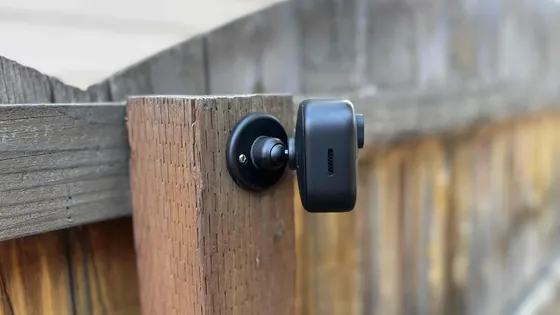
Table of Contents
The parking lot camera is the most argued line item in a commercial CCTV budget, and usually the one that delivers the weakest footage. A fixed camera at the entrance sees the vehicle approach but misses the plate angle. A camera above the exit sees the plate but not the driver. Most lots are too wide for a single fixed lens and too dark for a cheap sensor. That is exactly the gap a PTZ camera fills: one motorized head with 36x optical zoom, 255 presets and a scheduled patrol covers ground that would otherwise need four to six fixed cameras, and it zooms into a plate or a face when an alarm fires.
This guide walks through a parking lot PTZ deployment step by step: entrance, exit, lane and blind spot placement; preset positions and patrol cruise; license plate coverage and LPR integration; full-color night vision; remote monitoring; and vandal and weather protection. It ends with a parking lot setup table and a buying checklist for business buyers. Every number is a typical value you can verify on a spec sheet.
Keep reading for more!
The Snapshot
- One PTZ head replaces four to six fixed cameras in a typical lot: a 36x optical zoom unit with a scheduled cruise covers the whole perimeter from one pole, then rests on the entrance during peak hours.
- Preset patrol is the core feature, not zoom: typical units hold 255 presets and chain them into cruise routes with a 10-30 second dwell per stop. A patrol cycle across 12 presets covers a 10,000 square meter lot roughly every 4-6 minutes.
- Plate coverage needs telephoto and speed: the 36x telephoto end reads a license plate at 50-80 m typical, with a shutter speed of 1/500-1/1000 s to freeze motion, and the camera swings to an LPR-linked preset when a plate event fires.
- Night is where parking lots are lost: a 5MP full-color night vision PTZ with an F1.0 lens records color evidence in zero light, while an IR-only head produces grayscale shapes that fail in court and in insurance disputes.
- Vandal protection is a specification, not an option: IP66 housing, IK10-rated dome, 6KV surge protection and a 4-6 m mounting height keep a parking lot camera working through rain, frost and deliberate damage.
Why Parking Lots Need PTZ
A parking lot is the hardest scene in commercial security. It is wide, open, dark after hours and full of moving vehicles with reflective glass and blinding headlights. Theft from vehicles, vandalism, hit-and-run damage and disputes over scratched doors all happen in the same asphalt field, often at night. A parking lot surveillance system that cannot identify a vehicle or read a plate after dark is paying for footage nobody can use.
Fixed cameras cover the lot poorly at scale. A typical 2.8 mm fixed camera sees a band roughly 25-30 m wide at usable identification quality. Covering a 10,000 square meter lot edge to edge takes four to six units, each with its own cable run, its own mounting point and its own storage share. The coverage is also static: a fixed camera watches one angle all night, so the vehicle that backs into the far corner is captured as a small blur unless a second camera happens to point there.
A PTZ camera solves the coverage problem with motion. One head on a pole at 5-6 m turns 360 degrees, tilts and zooms. Its 255 presets store the exact views the site manager cares about: the entrance barrier, the exit lane, the ramp, the stairwell door, the far corner where the dumpsters sit. A scheduled cruise walks those views in a loop, and when a motion event or a linked sensor fires, the head swings to the matching preset in about one second and zooms in. The practical result is one camera doing the patrol job of a small fixed fleet, at a fraction of the cabling and recorder load.
The honest limit: a PTZ watches one place at a time. A parked lot with heavy pedestrian traffic benefits from keeping the cruise short, and critical chokepoints like the entrance barrier usually deserve a dedicated fixed camera with the PTZ as the response head. The combination, not the PTZ alone, is what most integrators spec. That is the reason a "ptz parking lot camera" search rarely ends at a single unit: the buyer is really planning a layered system.
Where to Mount: Entrances, Exits, Lanes and Blind Spots
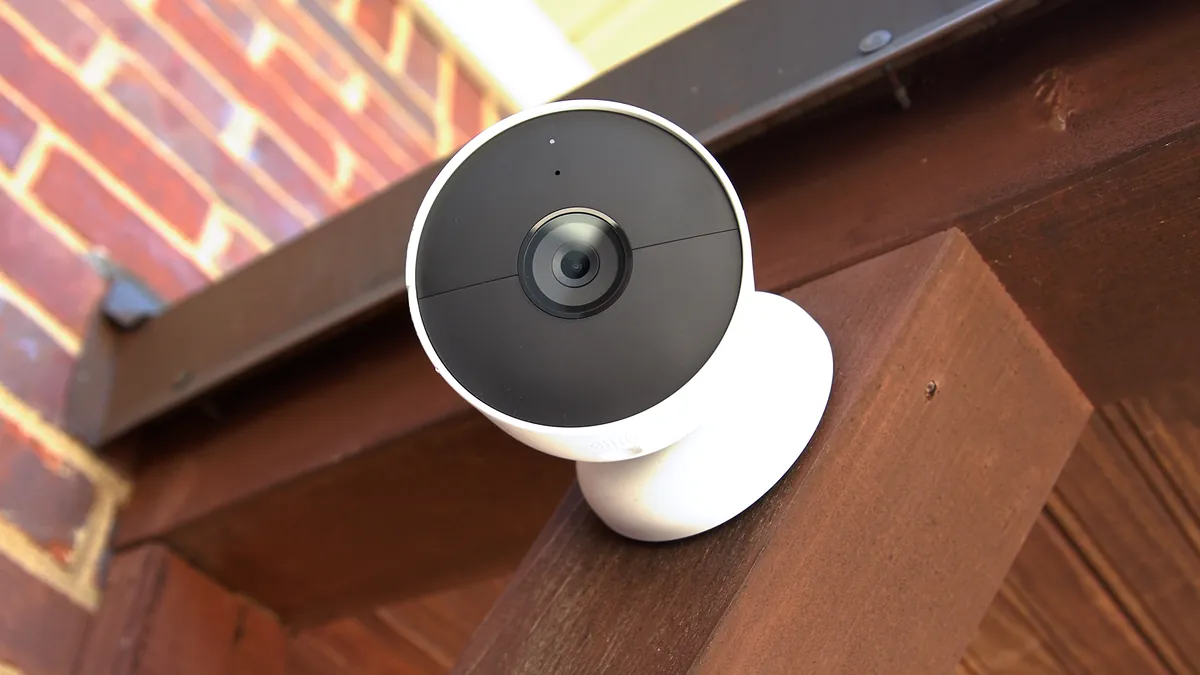
Parking lot camera placement follows the traffic, not the square footage. The four priority positions are the entrance, the exit, the main lanes and the blind spots. Each has a different aim, height and preset strategy.
Entrance. Mount the camera so it sees the vehicle front at the barrier or gate, angled across the approach rather than straight down the lane. A 30-45 degree offset reduces headlight glare and gives the plate a better angle. The entrance preset is the most-used view in the system, so it should be preset number one and the default rest position during peak hours.
Exit. The exit needs the rear plate of every departing vehicle. Mount height 4-5 m, aimed down the exit lane at a shallow angle. If the exit is pay-to-exit or has a barrier, the camera watches the queue position where vehicles actually stop.
Lanes. Main lanes get a patrol preset every 40-60 m of run, each preset covering one lane segment at an angle that reads both direction signs and vehicle sides. Lanes are where speed matters most, so the preset should be set at moderate zoom, not full telephoto, to keep the field wide enough to catch a vehicle in motion.
Blind spots. Stairwell doors, elevator lobbies, payment machines, the dumpster corner and the far edge of the lot are where damage claims and theft concentrate. Give each blind spot its own preset and schedule it into the night cruise. A blind spot covered by a patrol preset every few minutes is not a blind spot anymore.
| Position | Mount Height | Aim | Primary Job | Presets |
|---|---|---|---|---|
| Entrance / barrier | 4-6 m | 30-45° offset at the stop line | Front plate + driver identification | 1-3 |
| Exit lane | 4-5 m | Down-lane at shallow angle | Rear plate capture | 1-2 |
| Main lanes | 5-6 m | Along the lane, every 40-60 m | Vehicle side + direction | 4-8 |
| Blind spots | 5-6 m | Door, machine or corner face-on | Theft, damage and dispute evidence | 2-4 |
← swipe to scroll →
A parking area camera mounted at 5-6 m keeps the head out of reach, reduces headlight bloom and still gives the telephoto end enough elevation to read plates on a 30-45 degree slope. Anything lower than 4 m invites vandalism and covers less ground; anything above 7 m starts to flatten the plate angle beyond what a reader can use.
Preset Positions and Patrol Cruise
A preset stores one pan, tilt and zoom coordinate: the entrance, the exit, the stairwell. Typical PTZ units hold 255 presets, and high-end parking heads reach 512. The number matters less than the planning: a well-planned lot uses 12-20 presets, and every one of them maps to a real view the site manager can name.
Patrol cruise chains presets into a route. Typical settings: 10-30 seconds dwell at each stop, a fixed sequence order, and a schedule that decides when the route runs. The classic parking lot schedule is a daytime cruise of the lanes, a dusk switch to the entrance and exit as the rest position, and a full 12-20 preset night patrol when the lot empties. Cruise speed matters too: a patrol that moves too fast is motion blur, and one that dwells too long leaves gaps in coverage.
Auto tracking turns a patrol head into a response head. When the camera detects a person or vehicle crossing a defined zone, it locks on and follows the target while the recording continues. Parking lots are one of the few scenes where auto tracking earns its cost: a person walking toward the payment machine, a car circling a lane, a figure at the dumpster. Typical tracking locks hold the target for 10-60 seconds before returning to the patrol route.
Two setup rules prevent the classic patrol failures. First, verify preset accuracy after installation: a preset that drifts 2-3 degrees between visits misses the plate lane by half a car width at telephoto. Second, schedule patrol changes around lighting: full-color cameras switch between color day mode and low-light night mode automatically, and the patrol route should switch at the same moment, not 40 minutes later.
License Plate Coverage and LPR Integration
Reading a plate in a parking lot is a zoom and shutter speed problem, not a resolution problem. The 36x optical zoom end of a PTZ head reads a standard plate at 50-80 m typical, and the same head reads one at 15-25 m with margin to spare. A fixed 2.8 mm camera, by comparison, captures a plate as unreadable pixels beyond about 8-10 m.
The three settings that make plates readable: shutter speed, angle and focus. Shutter speed 1/500-1/1000 s freezes a vehicle moving at typical parking speeds of 10-30 km/h. The plate angle should stay under 30 degrees of vertical tilt, which is why mount height and aim matter more than lens length. And the telephoto preset should be focus-locked at installation, because auto-focus hunting on a glossy plate produces a second of blur exactly when the plate is centered.
LPR integration turns plate capture into an automated record. The common architecture: an ANPR/LPR server reads the video stream, extracts plate text, and triggers the PTZ to swing to a linked preset when a plate event fires. A typical trigger chain is motion at the barrier, then LPR reads the plate, then the PTZ zooms to the follow-up view of the driver area, and the NVR writes all three clips to one event record. The same plate database can flag a watchlist vehicle, open a barrier for registered tenants, or simply timestamp every vehicle entry and exit.
Plate coverage has a realism check worth stating: no camera reads every plate every time. Dirty plates, headlight glare and wet reflective surfaces defeat readers at some rate even in perfect setups. A realistic LPR capture rate in a parking environment is 90-97% on the main entry lane, and a PTZ-linked reader should be treated as the evidence layer, with the barrier loop or gate sensor as the trigger source. Buyers should ask for the typical capture rate, not the marketing claim, when comparing parking lot camera quotes.
Night Vision for Parking Lots
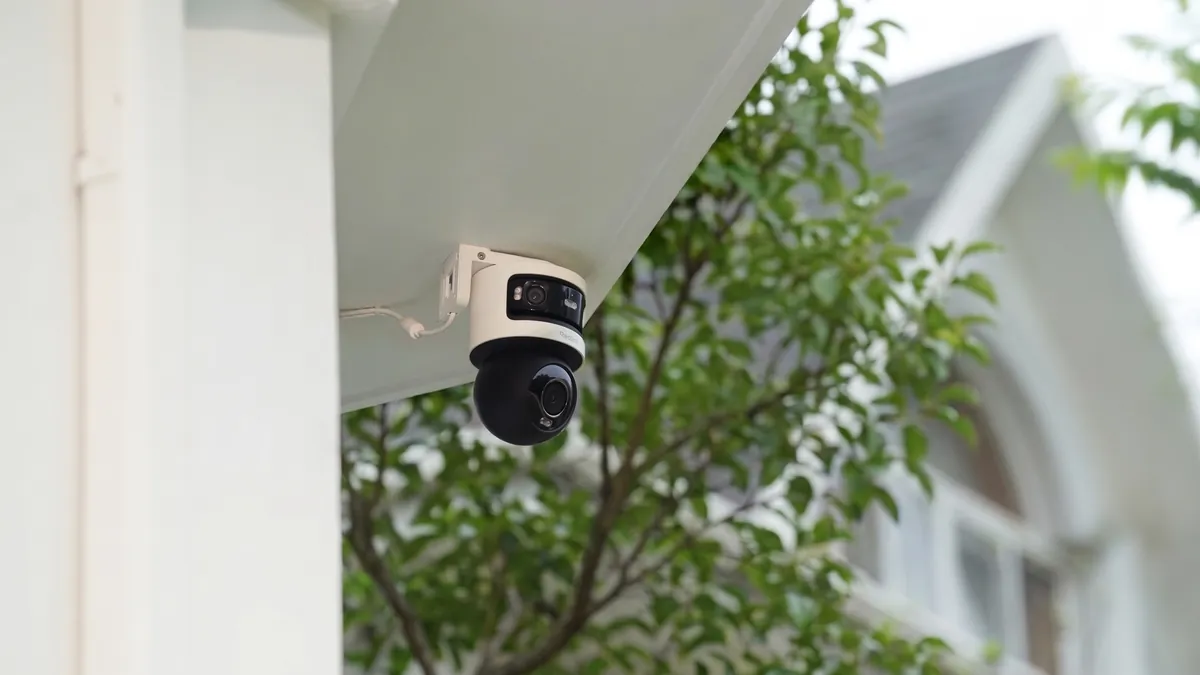
Most parking lot incidents happen after dark, and dark is where cheap cameras fail. The two night strategies are IR illumination and full-color night vision. An IR PTZ lights the scene with 850 nm LEDs and records grayscale; a full-color night vision head uses a large sensor, an F1.0 aperture and built-in white light to record continuous color in zero light.
For a parking lot, color evidence is not a luxury, it is the answer to the most common disputes. What color was the vehicle? What color was the jacket? Which side of the door was scratched? Grayscale footage cannot answer those questions. A 5MP full-color night vision PTZ with an F1.0 lens records usable color out to 20-40 m typical, and the 36x telephoto end keeps color identification at distance where an IR head produces a silhouette.
Typical night ranges: a full-color PTZ covers 20-40 m of continuous color with its white-light fill; an IR PTZ reaches 30-60 m but in monochrome. Headlight glare is a separate problem: vehicles entering a dark lot blaze toward the camera. Wide dynamic range (WDR) of 120 dB or better keeps the plate and the headlight in the same usable frame, and it is a must-spec on every entrance and exit position.
Night setup details that decide the footage quality: disable the camera's automatic day-night switch delay so it flips to night mode at the right light level; set the patrol route to night speed; and confirm the white-light fill does not create a halo that blinds the plate zone. Full-color heads with a dedicated light ring separate from the lens housing avoid most of that halo problem at the design stage.
Remote Monitoring and Alarm Linkage
A parking lot PTZ is a network device first. It streams over RTSP, controls over ONVIF Profile S and T, and integrates into the NVR or VMS through the standard API. Typical patrol stream bitrate with H.265 compression is 2-4 Mbps, which keeps a 12-camera site under a 1 Gbps switch comfortably and fits a modest uplink for remote viewing.
Remote monitoring for a parking lot usually means one operator watching several sites, not one guard staring at a single feed. The practical pattern: fixed cameras cover the chokepoints on a wall view, and the PTZ heads are the response tools. When a motion event fires, the NVR pushes the PTZ to the linked preset, records the clip, and sends a push notification to the operator's phone. Alarm linkage is the feature that makes a PTZ worth its price: motion at the gate swings the head there in about one second, and the operator sees the plate and the driver without touching the joystick.
Multi-site operators should check three things before committing to a fleet: ONVIF conformance across brands, so one VMS drives all heads; dual-stream support, so the patrol stream stays low-bandwidth while the telephoto detail stream records at full resolution; and P2P or VPN remote access, so the head is reachable from any browser or phone app without port forwarding on the local network. Time sync over NTP matters too: plate and event records only reconstruct a timeline if every camera and the LPR server share a clock.
| Scenario | Typical Setup | Result |
|---|---|---|
| Motion at barrier | PTZ preset 1 + alarm trigger | Head on the entrance in ~1 s, plate + driver captured |
| LPR plate event | LPR server + PTZ follow-up preset | Plate text logged, follow-up clip saved to one record |
| Night patrol | 12-20 presets, 10-30 s dwell | Full-lot cycle every 4-6 minutes in color |
| Operator check-in | P2P app, dual stream | Telephoto detail on demand at low uplink cost |
← swipe to scroll →
Storage planning follows the same math as any megapixel deployment. A 5MP full-color PTZ at 15 fps with H.265 records roughly 10-14 GB per camera per day at typical parking-lot activity, and more during peak hours when the patrol is busy. Eight cameras keeping 30 days need about a 3-4TB recorder. Budget the patrol stream and the telephoto event clips separately if the recorder supports dual recording profiles.
Weather and Vandal Protection
A parking lot camera lives outdoors, unheated and unsupervised. IP66 housing keeps out rain and dust, and IK10-rated polycarbonate domes survive hammer blows and thrown objects. Surge protection of 6KV on the network and power lines matters in lots with long cable runs, where lightning-induced spikes travel the PoE cable straight into the recorder port.
Mounting is the first line of vandal defense. A parking area camera at 4-6 m is out of reach of casual damage, and a wall or pole bracket with anti-tamper screws stops removal. The housing should also manage heat: typical operating range is -30°C to 60°C, with a heater option for cold climates and a fan or passive venting for sun-baked asphalt lots.
Vandal resistance is a specification you verify, not a claim you trust: ask for the IP and IK ratings, the surge rating, and the operating temperature range in writing on the datasheet. The same checklist applies to the pole and conduit. A camera that survives the weather but loses its cable to a damaged conduit is down just the same.
Two less obvious protection details: a tamper alarm that fires when the housing is opened or the view is blocked, and a scheduled lens-cleaning policy. A parking lot PTZ with a dirty dome records fog for weeks before anyone notices, so a monthly cleaning walk should be part of the operating contract, not an afterthought.
Parking Lot Setup Table
The table below is the practical start for any parking lot PTZ deployment. It maps each scene to the recommended camera, preset count, night mode and LPR role. Treat every value as a starting point, then tune against the actual lot size, traffic and lighting.
| Scene | Camera | Zoom / Lens | Presets | Night Mode | LPR Role |
|---|---|---|---|---|---|
| Entrance / barrier | PTZ 36x + fixed backup | Telephoto preset for plate lane | 1-3 | Full-color, WDR 120 dB | Primary read position |
| Exit lane | PTZ 36x | Shallow-angle rear plate view | 1-2 | Full-color, shutter 1/500 s | Rear plate capture |
| Main lanes | PTZ 36x patrol | Moderate zoom per segment | 4-8 | Full-color cruise | Follow-up view |
| Blind spots | PTZ 36x or fixed 5MP | Wide or preset view | 2-4 | Full-color or IR fallback | None, event evidence |
| Whole-lot night patrol | PTZ cruise route | 12-20 preset route | 12-20 | Full-color, 10-30 s dwell | Watchlist scan |
← swipe to scroll →
Two patterns in the table are worth repeating. First, the entrance and exit get the LPR presets, because that is where every vehicle must pass. Second, the whole-lot patrol is a night schedule: during the day, traffic is heavy and the head should rest on the entrance rather than wander. An outdoor parking camera that follows this pattern covers the full lot with one head and a handful of presets, which is the entire argument for PTZ in a parking environment.
Buying Checklist for Parking Lot PTZ
Walk this checklist in order when comparing parking lot camera quotes. Every item maps to a line on the spec sheet.
- 1. Optical zoom, not digital. Confirm the zoom number is optical. A 36x optical zoom with a 4.6-167 mm focal range is the typical parking-lot grade; digital zoom adds nothing for identification.
- 2. Preset count and patrol. Confirm at least 128 presets (255 is typical on better heads), cruise routes with configurable dwell, and scheduling by time of day.
- 3. Full-color night vision. For evidence quality after dark, require 5MP full-color with an F1.0 lens and stated color range; treat IR-only as the budget fallback.
- 4. WDR and shutter. Require WDR of 120 dB or better and shutter speeds to 1/1000 s for plate capture in headlight glare.
- 5. Weather and vandal ratings. IP66, IK10, 6KV surge and a stated operating range from at least -30°C to 60°C.
- 6. ONVIF and integration. Profile S and T conformance, RTSP streaming, and a documented API for LPR and VMS integration.
- 7. PoE+ power. Confirm 802.3at PoE+ (up to 25.5 W typical for a PTZ head with heater) or a matching DC supply.
- 8. Storage math. Size the recorder from H.265 figures: 10-14 GB/day per 5MP head at typical activity, plus 20% headroom.
- 9. Supplier support. For wholesale orders, confirm firmware update policy, ONVIF test reports, MOQ, warranty length and sample policy before committing.
For B2B buyers, the checklist is the same but the stakes are higher: a fleet of 20 heads multiplies every spec error. An outdoor parking camera that fails ONVIF conformance is a camera the VMS cannot drive. A plate preset that drifts is a plate that never gets read. Buyers should also remember that car park CCTV buyers in different regions call the same system different names, but the specification language is the same: optical zoom, presets, IP rating, night mode and LPR interface.
Parking Lot PTZ Camera Questions
How many cameras do I need for a parking lot?
For a typical 10,000 square meter lot, one PTZ with 12-20 presets plus one or two fixed cameras at the chokepoints covers most sites. The PTZ patrols the open area; the fixed cameras guarantee the entrance and exit are always recorded even when the head is elsewhere.
Can one PTZ camera watch an entire parking lot?
Yes, with the right schedule. A 36x PTZ with a cruise route over 12-20 presets cycles the whole lot every 4-6 minutes. The tradeoff is that it watches one view at a time, so critical positions like the entrance benefit from a dedicated fixed camera.
What is the best height to mount a parking lot PTZ camera?
Typically 4-6 m. At that height the head is out of reach of vandalism, covers a wide patrol area, and still keeps the plate angle under 30 degrees for the LPR presets. Higher than 7 m flattens the plate angle; lower than 4 m invites damage.
Can a PTZ camera read license plates?
Yes, at the telephoto end. A 36x optical zoom reads a plate at 50-80 m typical, and the practical LPR capture rate on a main entry lane is 90-97% with the right shutter speed, angle and focus. PTZ is the standard response head in LPR systems.
Do I need full-color night vision for a parking lot?
If the footage may be used as evidence, yes. Full-color night vision records vehicle and clothing color in zero light, while IR records grayscale. For dispute resolution, insurance claims and police reports, color is the difference between usable and useless footage.
How much storage does a parking lot PTZ need?
A 5MP full-color PTZ at 15 fps with H.265 records roughly 10-14 GB per day at typical activity. Eight cameras keeping 30 days need about a 3-4TB recorder, and dual recording profiles can keep patrol streams small while event clips stay full resolution.
The Bottom Line
A parking lot PTZ deployment is won by presets, patrol scheduling and night capability, not by the zoom number on the box. Mount the head at 4-6 m, plan 12-20 named presets across the entrance, exit, lanes and blind spots, schedule a color night patrol, link the plate presets to the LPR server, and spec IP66, IK10 and 6KV surge protection. One PTZ with 255 presets and 36x optical zoom then does the job of a small fixed fleet, with evidence that holds up after dark.
At FULLCOLORCAM we build 5MP full-color night vision PTZ cameras with F1.0 lenses, 36x optical zoom, 255 presets, IP66 housing and ONVIF conformance, tested before shipping and with free P2P remote access. Send us your lot size, traffic and chokepoints for a spec-matched quote at cj226144@gmail.com: we will tell you the mounting points, preset plan and recorder size your parking lot actually needs.
NEXT STEP
Ready to Upgrade to Full-Color Night Vision?
Send us your requirements — our team responds by email.
Written by
Ray ChanCCTV Buyer's Guide Author · Full-Color Night Vision Specialist. Ray helps global importers and integrators source factory-direct security cameras.